Research
Research
Our goal is to establish a long term research and educational program in the area of automatic control and dynamic systems. We pursue research in:
- 01Data Attribution and Agentic AI for Control, Manufacturing, and Robotics
- 02Oil/Gas Drilling Automation
- 03Roll-to-Roll (R2R) Dry Transfer for Flexible Electronics and Advanced 2D Materials
- 04Autonomous Mobile Robots/Ground Vehicles
- 05Fuel Cell and Rechargeable Battery Systems
- 06System Identification/Learning Based on Physiological Signals
- 07Microgrids/Smart Grids
- 08Wind Turbine Systems
- 09Intelligent Sensors
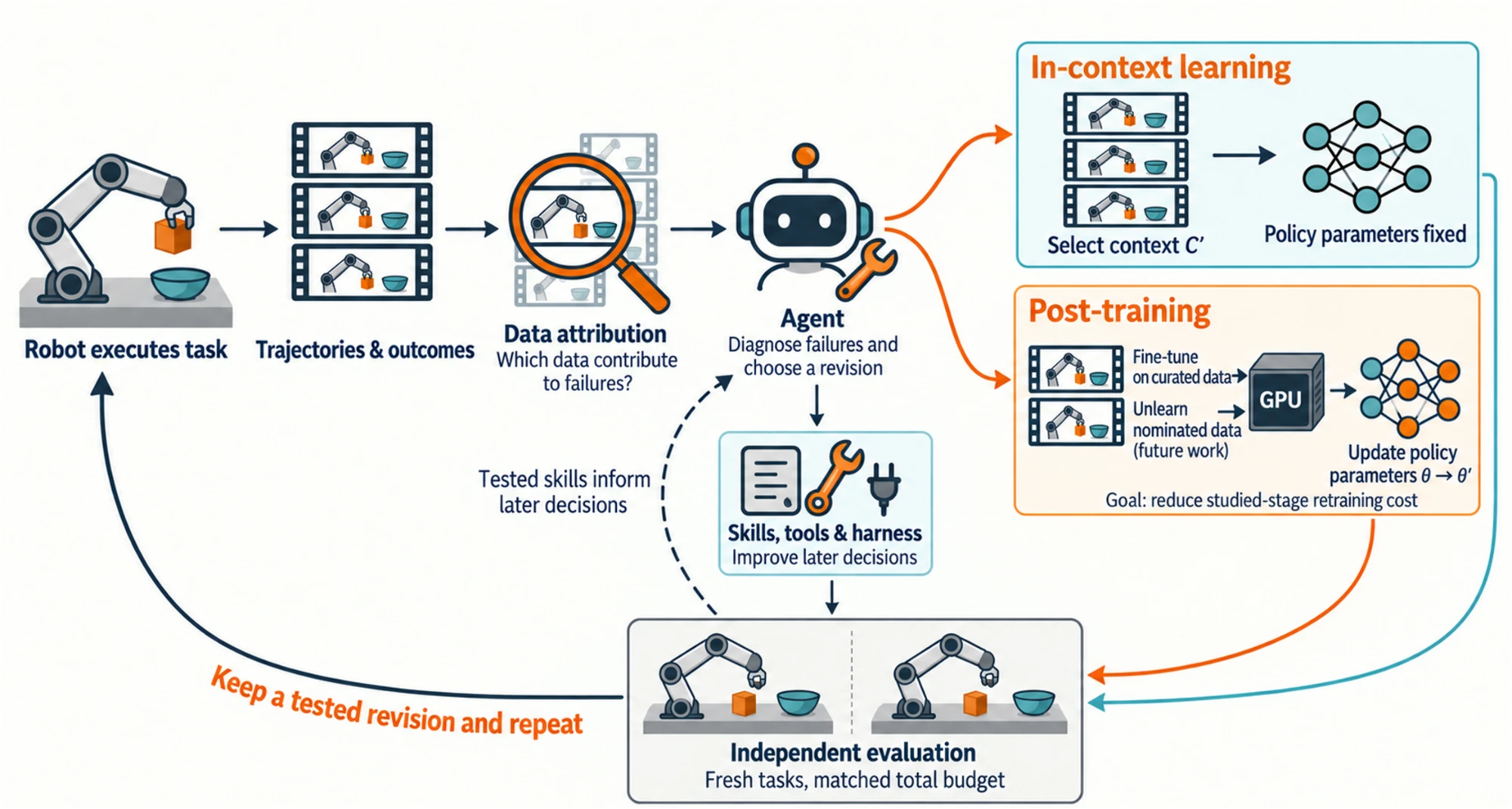
Data Attribution and Agentic AI for Control, Manufacturing, and Robotics
Objectives
- To develop data attribution across the control stack, from system identification and the linear quadratic regulator to data-enabled predictive control and in-context vision-language-action (VLA) policies
- To connect changes in data to certified control safety margins, and to study trajectory unlearning, group effects and cross-agent influence
- To develop agents that use attribution to improve robot policies through post-training and in-context learning, and that improve their own skills, tools and harness
- To evaluate the integrated loop in roll-to-roll manufacturing and robot manipulation
Oil/Gas Drilling Automation
Objectives
- To develop FEM models and control algorithms to mitigate undesired drillstring dynamics
- To develop driftflux models and two-fluid models to describe the transient well hydraulic behavior, and develop novel control methodologies to mitigate the kick effects
- To develop software tools to optimize directional drilling path
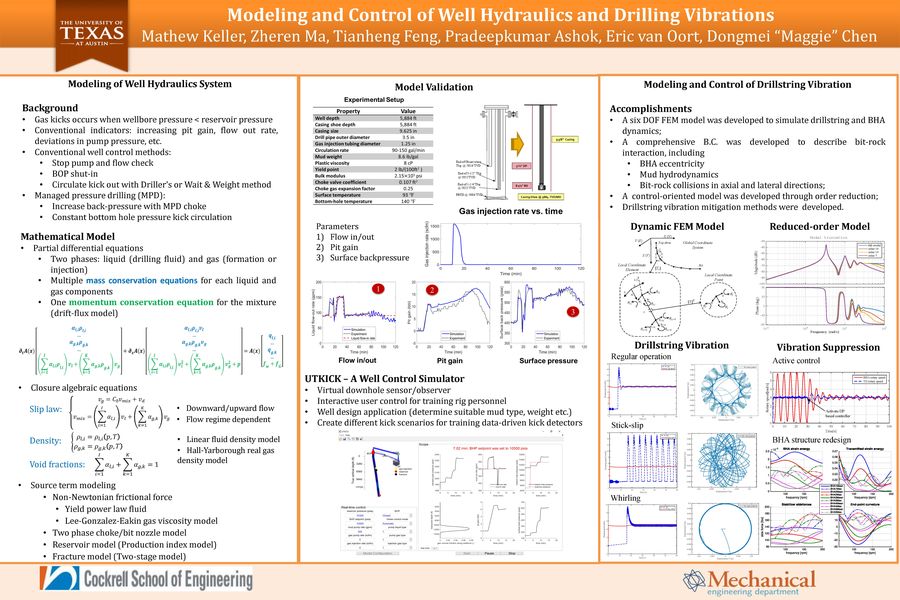
Examples of results (Modeling and Control of Well Hydraulics and Drilling Vibrations)Publications in this area
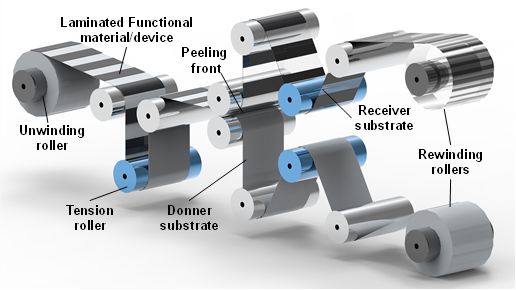
Roll-to-Roll (R2R) Dry Transfer for Flexible Electronics and Advanced 2D Materials
Objectives
- To develop control strategies to maintain the optimal peeling condition for successful device transfer
- To build physics-based, control-oriented, models of the R2R peeling process
- To explore the applicability of advanced control techniques such as switching control and hybrid learning-based real-time optimal control on the R2R dry transfer process
Examples of results (schematic and experiment setup)Publications in this area
Autonomous Mobile Robots/Ground Vehicles
Objectives
- To develop a platform that can perform optimal dispatching and routing of a school of autonomous mobile robots/ground vehicles in real time considering both the shortest route and the task assignment priority
- To develop a framework that design customized autonomous mobile robots/ground vehicles based
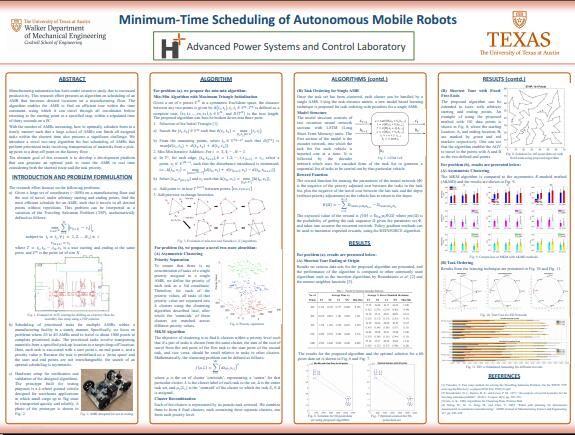
Examples of results (Minimum-Time Scheduling of Autonomous Mobile Robots; Robot; Demo)Publications in this area
Fuel Cell and Rechargeable Battery Systems
Objectives
- To develop models and online estimators for predicting the state of health for both fuel cells and rechargeable batteries in real time
- To develop control strategies for hybrid powertrain systems and BMS in real time
- Intercity trains
- Delivery trucks
- Buses
- Passenger vehicles
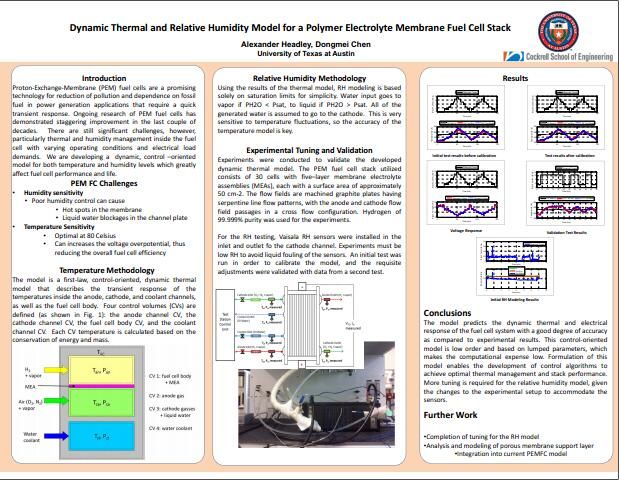
Examples of results (Dynamic Thermal and Relative Humidity Model for a Polymer Electrolyte Membrane Fuel Cell Stack)Publications in this area
System Identification/Learning Based on Physiological Signals
Objectives
- To develop a system dynamic-based approach for drowsiness detection using electrooculography signals
- To develop a bradycardia prediction algorithm based on a single ECG signal collected from preterm infants
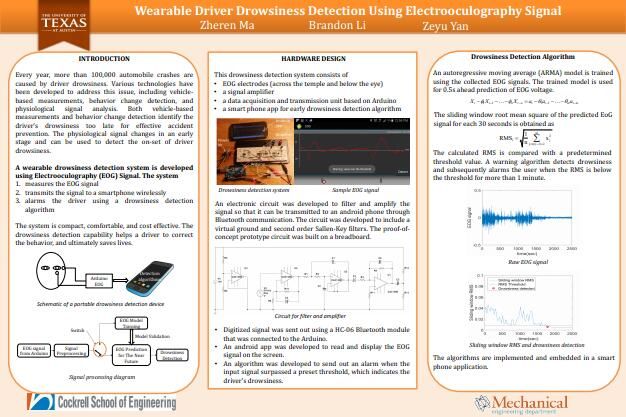
Examples of results (Wearable Driver Drowsiness Detection Using Electrooculography Signal)Publications in this area
Microgrids/Smart Grids
Objectives
- To develop optimal control algorithms to improve microgrid resilience with respect to voltage and frequency
- To develop decentralized control themes that use wind turbine rotors for energy storage and improve the system efficiency
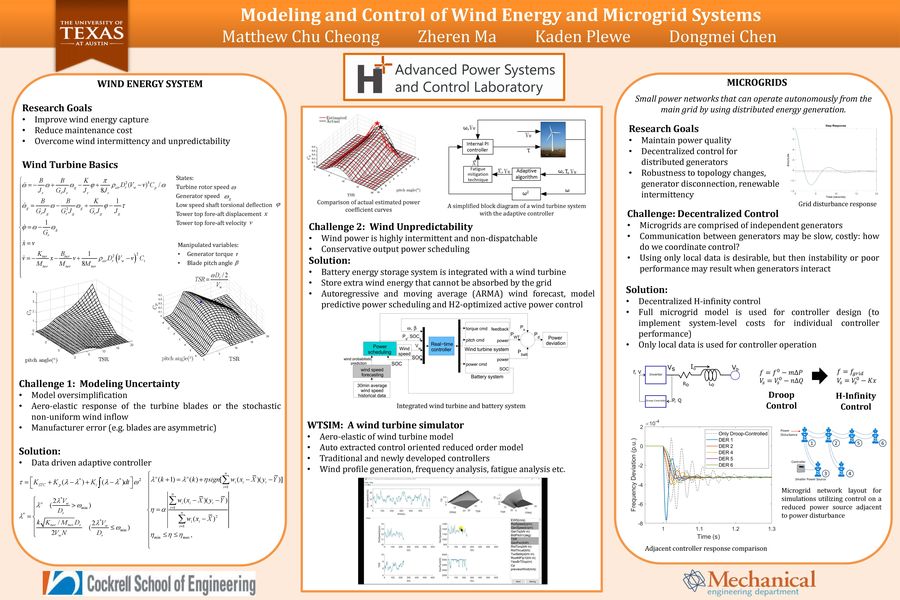
Examples of results (Wind Turbine Participation for Microgrid Frequency Control; Modeling and Control of Wind Energy and MicrogridSystems)Publications in this area
Wind Turbine Systems
Objectives
- To develop optimal controllers to maximize wind turbine energy capture and minimizing structure fatigue loading
- To explore switched control theories to mitigate the undesired wind turbine transition dynamics between Region 2 and Region 3
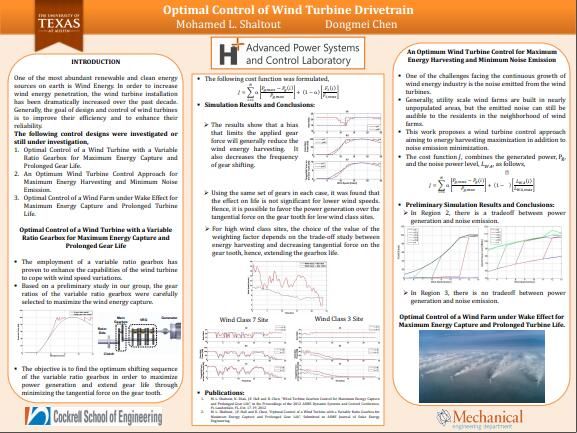
Examples of results (Optimal Control of Wind Turbine Drivetrain )Publications in this area